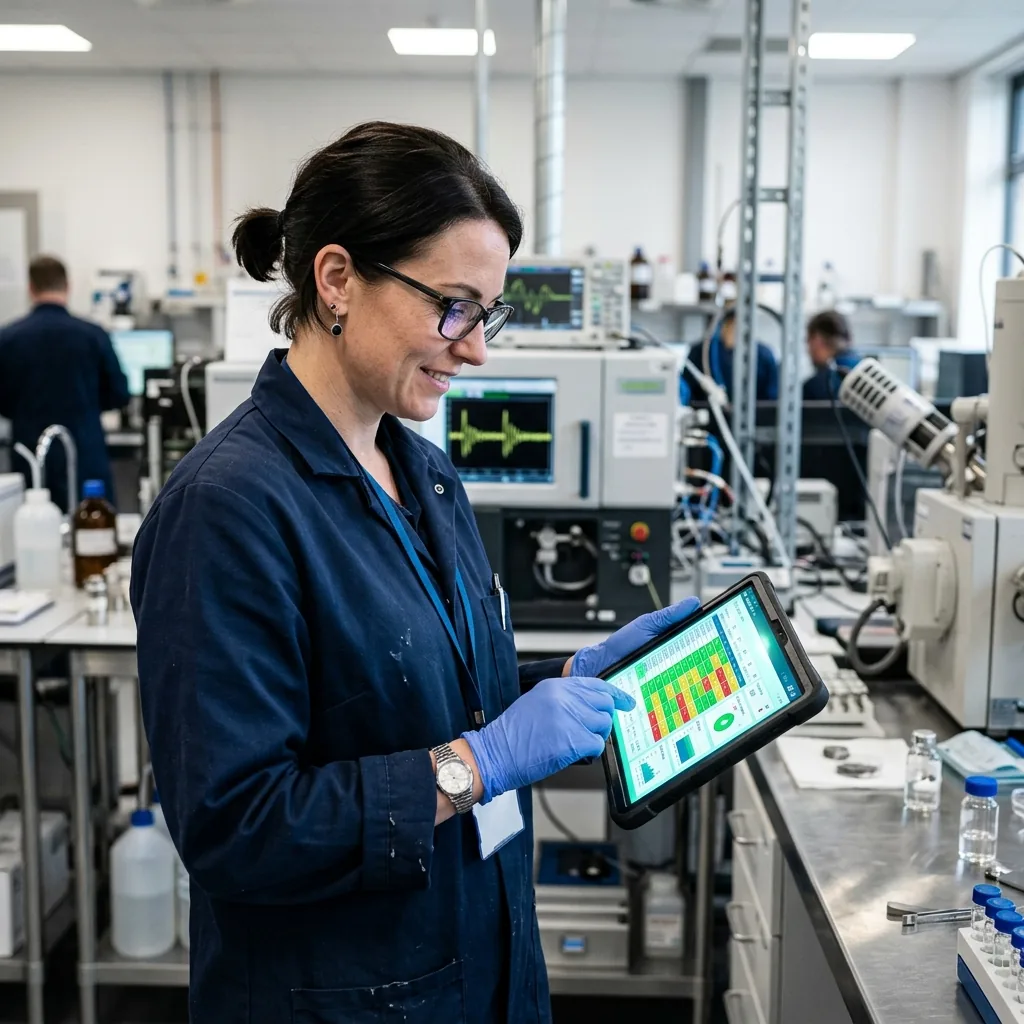
Why Digital Assay Workflows Raise the Stakes for Data Integrity
In the high-throughput environment of modern mining laboratories, the transition from manual logging to digital workflows is a critical component of digital mining laboratories. As assay volumes for gold, copper, and iron ore increase, the complexity of managing data integrity grows exponentially. A Mining Laboratory LIMS is not merely a database; it is a control mechanism designed to maintain the veracity of every analytical result produced. The integrity of a laboratory's output depends entirely on the ability to trace an analytical result back to a specific, qualified analyst, a calibrated instrument, and a validated method. When much of the laboratory's operational data moves from paper to digital formats, the risks associated with unauthorized access, unverified software modifications, and uncalibrated equipment become much more concentrated and impactful.
The primary objective in QA/QC Mining Labs is the prevention of data anomalies. This requires a system that does more than record numbers; it must actively participate in the quality management system. A specialized Mining Laboratory LIMS provides the infrastructure to enforce laboratory rules at the point of data entry. This includes the enforcement of training reviews and the validation of instrument calibration status. Without these automated safeguards, the laboratory risks generating results that, while numerically accurate, are legally and scientifically indefensible due to a lack of verifiable traceability or the use of expired calibration protocols. Effective Laboratory Automation Mining relies on the seamless integration of these validation layers to ensure that the laboratory's digital footprint is as reliable as its physical samples.
The Identity Gap and Hidden Instrument Risks That Break the Audit Trail
The move toward digital workflows introduces specific vulnerabilities that can compromise the entire assay laboratory management process. One of the most significant risks is the "identity gap" in the audit trail. In many laboratories, the person entering the data into the system is not the person who performed the physical analysis. If the LIMS only records the computer user's credentials, the true chain of custody for the analytical result is broken. This discrepancy makes it impossible to hold specific analysts accountable or to verify that the person performing the work possesses the necessary competency. Furthermore, the reliance on shared terminals without strict login enforcement can lead to a complete loss of traceability, rendering the laboratory's QA/QC protocols ineffective during external audits.
Another critical challenge involves the management of instrument-related variables. Mining laboratories rely on precision instruments like ICP-OES, XRF, and Fire Assay furnaces. These instruments require strict adherence to calibration intervals. However, a significant operational risk exists when data is ingested from an instrument that has exceeded its calibration date. Without an integrated system to block such entries, the laboratory may unknowingly incorporate erroneous data into its final reports. Additionally, the maintenance of these instruments by external service engineers introduces a "hidden" risk. Software patches or modifications applied during servicing, if not properly recorded and verified, can alter the instrument's performance without the laboratory management's knowledge, potentially invalidating large batches of processed samples.
- Audit Trail Fragmentation: The disconnect between the system operator and the actual laboratory analyst prevents the establishment of a legally defensible record of responsibility for each assay result.
- Calibration Non-Compliance: The lack of automated enforcement allows for the entry of analytical data generated by instruments that have surpassed their validated calibration intervals, compromising sample validation mining labs standards.
- Uncontrolled Instrument Modifications: Software updates or patches applied by third-party engineers can introduce unverified changes to data processing logic, making it difficult to maintain laboratory traceability mining protocols.
Tying Every Result to a Qualified Analyst and a Calibrated Instrument
To address these vulnerabilities, a specialized Mining Laboratory LIMS provides integrated control modules that link personnel competency and instrument status directly to the data entry workflow. The solution begins with the implementation of a robust identification system that distinguishes between the person performing the analysis and the person entering the data. By allowing for separate identification, the LIMS ensures that the audit trail reflects the actual analytical event, providing maximum flexibility and precision in laboratory traceability mining. This ensures that every result is tied to a qualified professional, regardless of who is operating the terminal at that moment.
Furthermore, the LIMS acts as a gatekeeper for laboratory quality. By incorporating records of calibration intervals and training reviews into the core workflow, the system can proactively prevent the entry of data that does not meet compliance standards. For example, if an analyst's training review is overdue, or if an ICP instrument's calibration has expired, the LIMS can restrict data ingestion or trigger an immediate non-conformance alert. This level of Laboratory Automation Mining transforms the LIMS from a passive repository into an active component of the quality management system, ensuring that only validated, audit-ready data reaches the final report. This proactive approach is essential for maintaining the high standards required in Assay Laboratory Management.
Generic "Goliath" Platforms Versus a System Built for Mining Scale
When selecting a system, many mining sites fall into the trap of purchasing generic, horizontal systems (the "Goliaths" built for 300+ user pharmaceutical labs). These systems inherently lack native mining logic. To achieve true Zero-Tampering compliance or Level 0 instrument integration, laboratories are forced into expensive, multi-year customization cycles governed by external consultants. At OnLIMS, our strategy is built entirely on a direct, 1-to-1 relationship. Our system is engineered for the exact scale of a mining operation (20-30 users), eliminating bureaucratic bloat, removing hidden upgrade consulting fees, and delivering specialized expertise directly to the Laboratory Supervisor and QA/QC Manager.
From Fewer QC Failures to a Continuously Defensible Audit Trail
Implementing a specialized Mining Laboratory LIMS provides measurable improvements in laboratory compliance and risk mitigation. The most significant benefit is the achievement of a continuous, verifiable audit trail that meets the stringent requirements of international mining standards. By automating the verification of analyst competency and instrument calibration, laboratories can significantly reduce the frequency of QC failures related to procedural non-compliance. This reduction in manual error detection leads to more efficient Assay Laboratory Management and prevents the costly rework associated with re-analyzing samples due to invalidated results. Furthermore, the ability to manage instrument software changes and backup raw data, such as chromatography files, ensures that the laboratory's digital archives are both compact and highly secure.
In conclusion, the security of a mining laboratory's data is inseparable from the security of its digital infrastructure. As laboratories continue to adopt more complex digital workflows, the importance of a LIMS that understands the specific needs of mining assaying cannot be overstated. OnLIMS provides the specialized functionality required to manage the nuances of analyst identification, instrument calibration enforcement, and data integrity. By moving away from manual or generic systems and adopting a specialized Mining Laboratory LIMS, laboratory managers can ensure that their laboratory remains a reliable, audit-ready and highly efficient component of the broader mining value chain. The focus must remain on creating a system where data entry is not just a task, but a validated, traceable, and secure event.