A Digital Twin Is Only as Reliable as the Assay Data Behind It
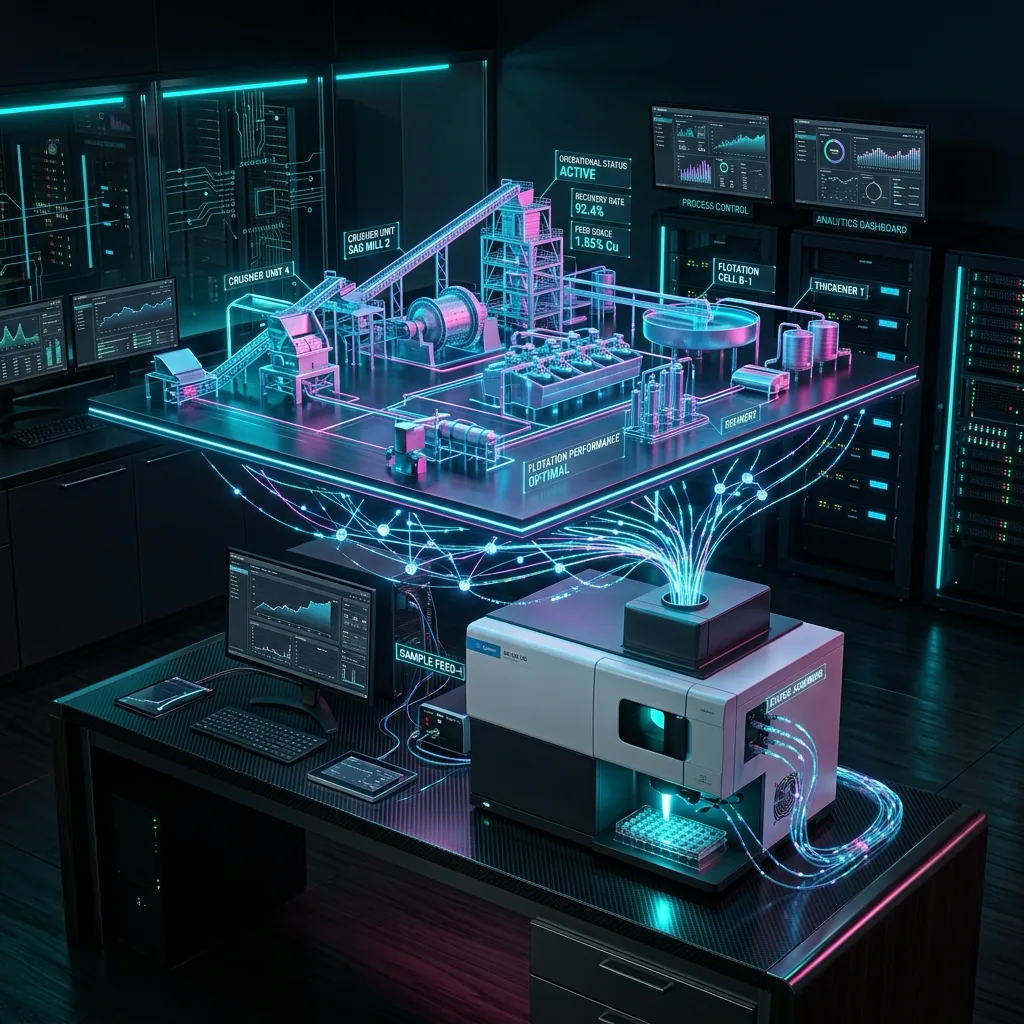
The transition from Mining 3.0 to Mining 4.0 is not merely a change in equipment, but a fundamental shift toward the creation of a "Digital Mine." At the center of this evolution is the concept of the Digital Twin—a virtual representation of the physical mining operation that synchronizes data processing and balances performance across the entire value chain. However, a Digital Twin is only as reliable as the data that feeds it. In the mining sector, the most critical data regarding ore grade, mineralogy, and metallurgical recovery originates in the laboratory. Without a specialized Mining Laboratory LIMS, the bridge between the physical sample and the digital model remains broken, relying on fragmented data silos and manual entries.
For a mining operation to achieve true Smart Mining capabilities, it must integrate end-to-end digital technologies that monitor product quality in real-time. This requires the laboratory to move beyond being a cost center and instead become a high-velocity data engine. By implementing a technical framework for Assay Laboratory Management, laboratories can ensure that the geochemical and metallurgical data flowing into the mine's digital ecosystem is accurate, timestamped, and traceable. This synchronization allows engineers and geologists to respond to unpredictable geological situations and optimize the extraction process based on empirical, digital evidence rather than delayed reports.
The Data Latency Gap: When the Twin Runs on Stale, Hand-Keyed Numbers
The primary obstacle to achieving a functional Digital Twin in mining is the "data latency gap." In many operations, laboratory data is still managed via spreadsheets or legacy systems that lack the granularity required for Mining 4.0. When assay results are manually transcribed or uploaded in batches at the end of a shift, the Digital Twin is operating on "stale" data. This lag prevents the real-time optimization of the processing plant and can lead to significant discrepancies between the predicted ore grade in the block model and the actual recovered metal. The lack of a specialized Mining Laboratory LIMS means that the critical link in the product quality monitoring chain is manual, introducing risks of transcription errors and data manipulation.
- Data Fragmentation: Assay data often resides in isolated spreadsheets or instrument-specific software, making it impossible to synchronize this information with the mine's central digital twin in real-time.
- Lack of Traceability: Manual workflows fail to provide a rigorous chain of custody, meaning that any anomaly detected in the Digital Twin cannot be traced back to the specific sample preparation or digestion step.
- QA/QC Inconsistency: Without automated control charts and CRM (Certified Reference Material) monitoring, the data entering the digital ecosystem may be biased, leading to flawed decisions in the mine plan.
Capturing Every Result at the Source: From Crushing to ICP-OES and Fire Assay
To solve these challenges, the laboratory must implement a Mining Laboratory LIMS designed specifically for the rigors of metals and mining. Unlike generic systems, a specialized Mining Laboratory LIMS manages the entire sample lifecycle—from reception and crushing to digestion and final assay—ensuring that every data point is captured digitally at the source. By automating the flow of data from instruments (such as ICP-OES or Fire Assay systems) directly into the LIMS, the operation eliminates manual entry and drastically reduces the time between sample collection and data availability.
This digital foundation is what allows the laboratory to integrate with the broader Smart Mining ecosystem. When the LIMS is configured for ISO 17025 compliance in assay labs, it ensures that the data feeding the Digital Twin is not only fast but scientifically valid. The system supports Laboratory Automation Mining by utilizing barcodes and automated workflow triggers, ensuring that the "digital avatar" of the mining process is updated with high-fidelity data. This enables the synchronization of data processing across mobile devices, controllers, and PCs, allowing the mine to adjust its operations dynamically based on the actual chemical composition of the ore being processed.
Faster Turnaround, Auditable Trails, and a Twin Built on Empirical Truth
The implementation of a specialized Mining Laboratory LIMS transforms the laboratory into the heartbeat of the Digital Mine. The measurable benefits include a significant reduction in sample turnaround time (TAT), the elimination of manual transcription errors, and a complete digital audit trail. More importantly, it provides the high-frequency, high-accuracy data necessary to maintain a reliable Digital Twin. When product quality monitoring is digitized, the mine can optimize energy consumption, reduce environmental impact through better tailings management, and increase overall recovery rates by adjusting plant parameters in real-time.
In conclusion, Smart Mining is impossible without the digitalization of the laboratory. The transition to Mining 4.0 requires a shift from manual assay tracking to an integrated, automated environment. By positioning a Mining Laboratory LIMS as the core of the data strategy, mining companies can ensure that their Digital Twins are based on empirical truth. This not only improves operational safety and productivity but also ensures that the mine can remain flexible and competitive in a volatile commodity market. The path to the Digital Twin begins with the digitalization of the assay, making the LIMS the most critical piece of software in the modern mining value chain.