Why Keyboards Are the Weakest Link in the Assay Data Chain
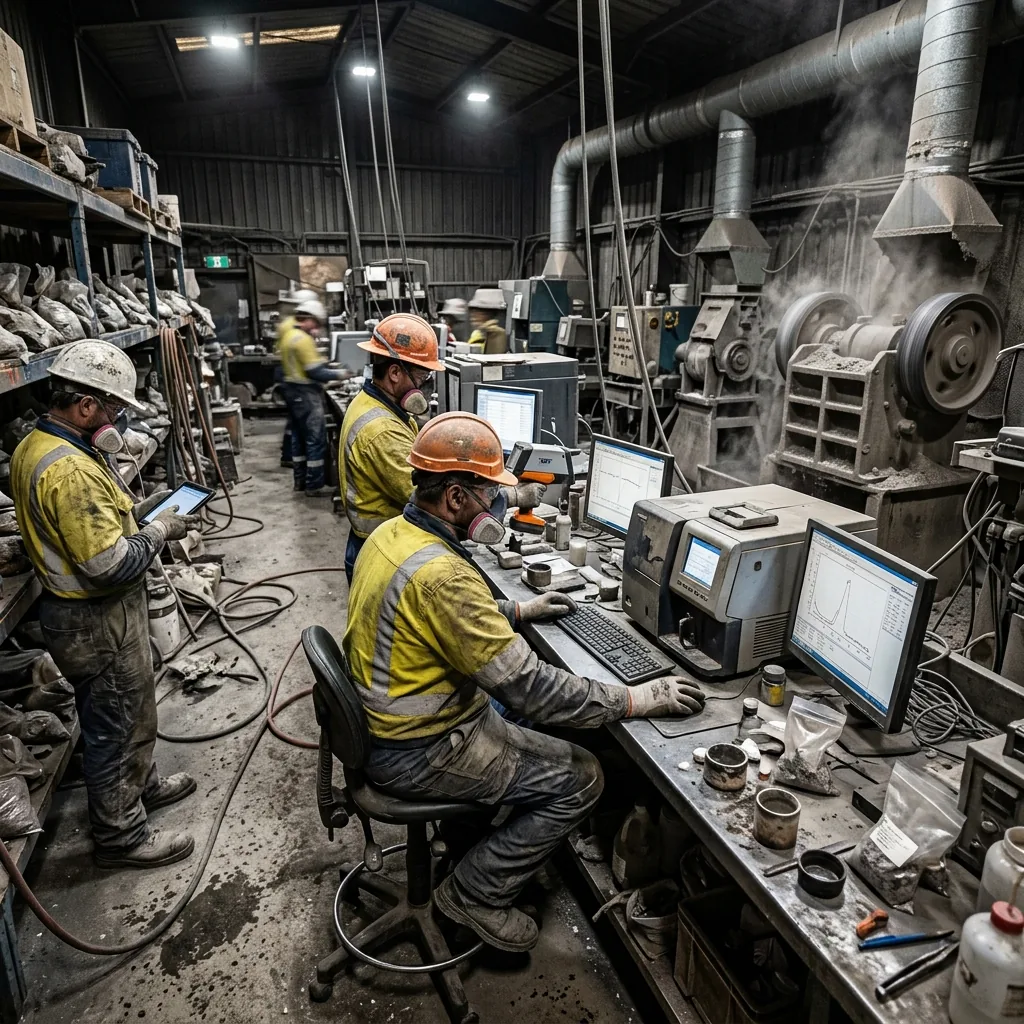
In high-throughput mining laboratories, the volume of analytical data generated daily is immense. From fire assay and ICP-OES to XRF and titration systems, the flow of raw data from instruments to the final report is a critical path that determines the overall turnaround time (TAT) of the operation. A specialized Mining Laboratory LIMS serves as the central nervous system for this data, but its effectiveness is entirely dependent on how efficiently it captures information from the analytical hardware. Manual data entry—the process of a technician reading a screen or a printout and typing values into a system—remains one of the most significant bottlenecks and risk factors in assay laboratory management.
The objective of modern laboratory automation mining is to create a seamless digital thread. This means that once a sample is processed by an instrument, the resulting concentration or measurement is transmitted directly to the LIMS without human intervention. This level of integration is not merely a convenience; it is a requirement for laboratories aiming to maintain rigorous QA/QC Mining Labs standards. By automating the data transfer, laboratories can ensure that the values reported are exactly what the instrument measured, removing the possibility of typos or "rounding errors" that can lead to incorrect metallurgical decisions or flawed ore grade estimations.
Legacy Instruments, Data Silos and the Hidden Cost of Transcription
The primary challenge in implementing a digital workflow is the heterogeneity of the instrument park. Most mining laboratories operate a mix of brand-new, digitally native equipment and legacy instruments that have been in service for decades. Legacy instruments often lack modern API capabilities, relying instead on older communication protocols or, in some cases, simple text-based file exports. This creates a "data silo" effect where the most critical analytical data is trapped within the instrument's local software or, worse, on a physical piece of paper. When these silos exist, the laboratory is forced to rely on manual transcription, which is inherently prone to error and significantly increases the labor cost per sample.
- Transcription Risks: Manual entry of assay results from ICP or AAS instruments frequently leads to transposition errors, where digits are swapped, potentially altering the perceived grade of a sample and impacting mine planning.
- Data Latency: The time elapsed between the instrument completing an analysis and the result being available in the LIMS can be hours or days if the workflow depends on a supervisor manually reviewing and entering batch files.
- Compliance Gaps: ISO 17025 compliance in assay labs requires strict traceability. Manual data entry breaks the digital chain of custody, making it difficult to prove that the final result was not altered during the transfer from the instrument to the report.
OnLIMS as a Universal Data Aggregator: From RS-232 to Flat Files
OnLIMS addresses these challenges by acting as a universal data aggregator. Rather than limiting integration to a few "certified" partners, OnLIMS is engineered to connect with any instrument that can output data. This includes a library of over 150 pre-integrated instruments across various analytical techniques, but the architecture is designed to be extensible. Whether an instrument utilizes a modern network protocol, a serial RS-232 connection, or generates a flat file (such as .CSV, .TXT, or .XML) in a shared folder, the system can be configured to capture, parse, and import that data automatically.
The integration process involves creating a technical mapping between the instrument's output format and the LIMS data fields. For example, in a titration workflow using equipment like the Metrohm Titrino, the LIMS can be configured to monitor the output file generated by the instrument. As soon as the titration is complete and the file is written, the Mining Laboratory LIMS detects the new entry, parses the specific result field, and associates it with the correct sample ID based on the batch sequence. This automation extends to legacy hardware; as long as the instrument can "send" data—even through an old printer port redirected to a file—OnLIMS can capture it. This ensures that the investment in older, reliable hardware is not wasted while the lab moves toward a fully digital ecosystem.
Faster Turnaround, Zero Typos and an Immutable ISO 17025 Audit Trail
The transition from manual data entry to automated instrument integration yields immediate, measurable improvements in laboratory performance. First, the reduction in human error is absolute for the integrated data points; a machine cannot "misread" a digit during a transfer. Second, the turnaround time is drastically reduced, as results are available for QA/QC review the moment the analysis is complete. This allows for real-time monitoring of the mining operation, enabling faster adjustments to the plant or the pit based on the most current assay data.
Furthermore, automating the data flow directly supports ISO 17025 compliance in assay labs by providing an immutable audit trail. Every result in the Mining Laboratory LIMS can be traced back to the instrument's original output file, ensuring total transparency and reproducibility. By supporting over 150 instruments and offering the flexibility to integrate any device that outputs data, OnLIMS removes the technical barriers to laboratory automation mining. This approach transforms the laboratory from a manual data-entry center into a streamlined analytical hub, ensuring that the data driving the mining operation is accurate, timely, and fully traceable.